

Published September 3, 2026
Relocating to Des Moines? Here’s What You Should Know Before You Move

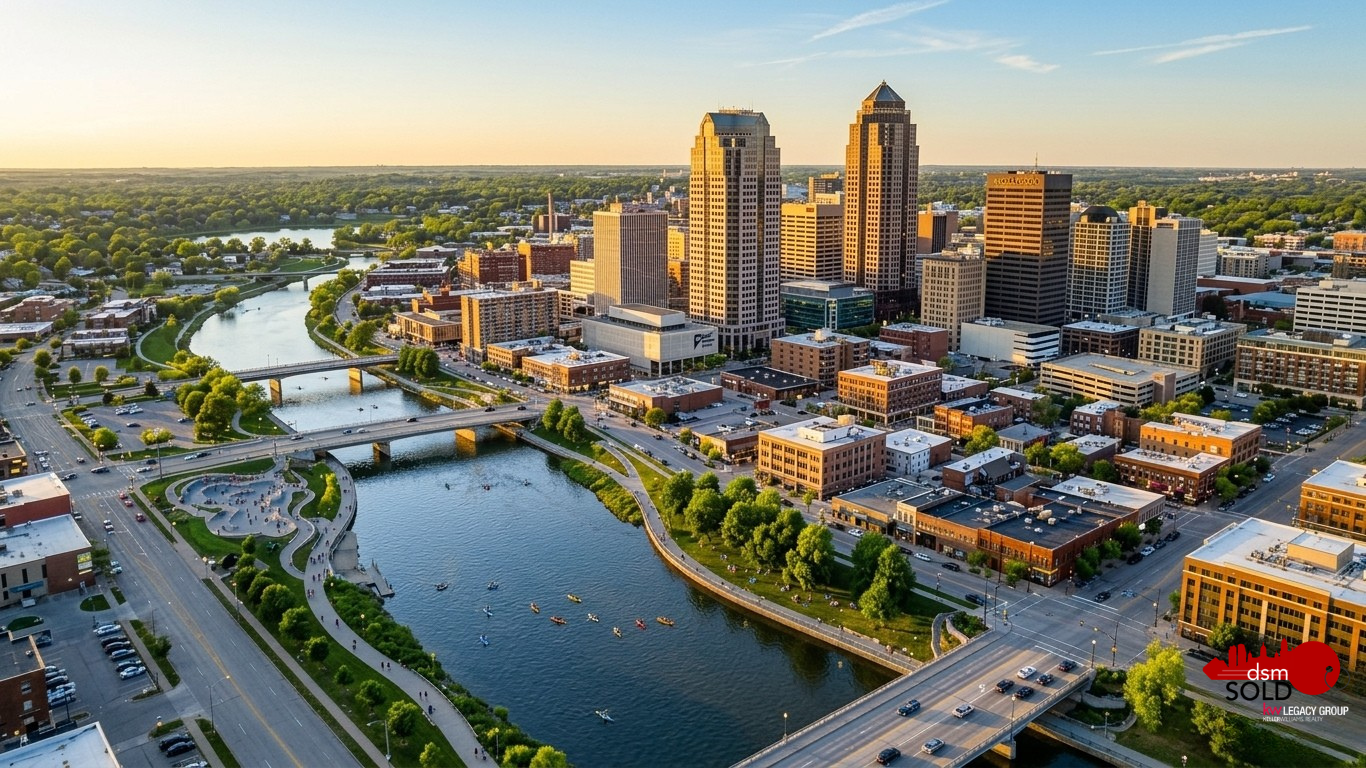
Thinking about relocating to Des Moines? You’re not alone. If you’re looking for more breathing room, a manageable commute, and a community that feels connected, Central Iowa is worth a closer look.
Whether you’re moving for work, family, or simply a fresh start, the right information can make the transition feel a whole lot easier. Here’s a practical look at what to expect—from cost of living and commute times to neighborhoods, schools, and the places that make Central Iowa feel like home.
Why People Are Relocating to Des Moines
Des Moines offers a mix that’s hard to ignore: a diversified economy, a range of housing options, shorter day-to-day drives than many larger metros, and neighborhoods with their own distinct personality.
For many newcomers, the appeal comes down to everyday life. You can explore established city neighborhoods, newer suburbs, parks and trails, local restaurants, and community events—without feeling like everything is hours away. And if you’re comparing communities before a move, a local Des Moines realtor can help you look beyond the map and think through what actually fits your lifestyle.
Cost of Living in Des Moines: What to Expect
Affordability is one of the reasons people consider Central Iowa. Housing costs can vary significantly depending on the neighborhood and community, so it’s important to look at the full picture rather than relying on one metro-wide number.
A few things to budget for as you plan your move:
Housing: Home prices vary by neighborhood, with established city neighborhoods and growing suburbs offering different options and price points.
Utilities: Iowa’s winters and summers mean heating and cooling costs are an important part of your monthly budget.
Groceries and everyday costs: Build room in your budget for food, healthcare, transportation, and everyday services.
Taxes: Iowa’s state income tax and applicable local sales taxes should be part of your overall planning.
If you own a home somewhere else, knowing your current home value can also help you understand what your next move may look like. A Des Moines real estate agent can help you review your options and get a better sense of how your home’s value could fit into your relocation plans.
Commute Times & Getting Around
One of the things many people appreciate about the Des Moines metro is how connected the communities are. Your commute will depend on where you live and work, but Central Iowa gives buyers plenty of options for staying close to the places they visit most.
Urban core neighborhoods: convenient access to downtown employers, restaurants, entertainment, and riverfront amenities.
Inner suburbs like Beaverdale, Urbandale, and Clive: established communities with relatively easy access to the metro.
Growth-ring communities like Johnston, West Des Moines, and Pleasant Hill: popular options for buyers who want a mix of convenience, newer development, and amenities.
Outer suburbs like Ankeny, Waukee, and Grimes: more space and newer housing options, with commute times that vary by location and traffic.
Interstates 235, 35, and 80 connect communities throughout the metro. When you’re choosing where to live, it’s worth looking at your actual work commute, school plans, and daily routines—not just the distance on a map.
Finding the Right Neighborhood
Des Moines isn’t one-size-fits-all. One neighborhood might be perfect if you want walkability and restaurants, while another may make more sense if you’re looking for newer construction, more space, or a particular school district.
Here’s a quick starting point:
Downtown & East Village
Walkable, energetic, and close to restaurants, the Principal Riverwalk, and downtown amenities. A natural fit for buyers who want more of an urban feel.
Beaverdale
Known for its established homes, brick-lined streets, community events, and strong neighborhood identity, with convenient access to downtown.
West Des Moines & Clive
Established suburbs with shopping, dining, parks, and access to major employment areas. These communities can be worth exploring if convenience and amenities are high on your list.
Ankeny, Waukee & Johnston
Growing communities with newer construction, expanding amenities, parks, and trails. They’re popular choices for buyers looking for more space and newer homes.
Urbandale & Grimes
A mix of established and newer housing, highway access, and community amenities can make these areas worth considering for a range of buyers.
As a local Des Moines realtor, The dsmSOLD Team knows these communities and can help you compare them based on your commute, budget, lifestyle, and long-term goals—not just what looks good on a listing sheet.
Schools in Central Iowa
If you’re relocating with kids, school boundaries and programs can be a major part of the decision. Central Iowa has a range of public, private, and parochial options, but school boundaries can vary by address.
A few tips for evaluating schools as part of your move:
Check district boundaries for the specific homes you’re considering.
Visit school websites for enrollment information, programs, activities, and current ratings.
Look at the full picture—not just a rating—including the programs and services that matter to your family.
Ask about upcoming boundary or enrollment changes when you’re considering a growing area.
A knowledgeable buyers agent can also help you identify which questions to ask as you compare neighborhoods, while keeping the focus on what works for your family.
Parks, Trails & Community Amenities
One of the best parts of living in Central Iowa is having plenty of ways to get outside and connect with the community.
Water Works Park & Gray’s Lake: walking and biking trails with scenic green space near downtown.
The Principal Riverwalk & John and Mary Pappajohn Sculpture Park: art, trails, and outdoor recreation in the heart of the city.
Raccoon River Valley Trail: a popular regional destination for biking and outdoor recreation.
Saylorville Lake: boating, fishing, beaches, and outdoor time just north of the metro.
Farmers markets, festivals, and community events: opportunities to get to know neighborhoods from Beaverdale to Waukee and beyond.
Those community connections are part of what makes a move feel like more than simply changing addresses.
Your Pre-Move Checklist
Before the moving truck arrives, a little planning can make your relocation much easier:
☐ Research neighborhoods and commute options based on where you’ll work.
☐ Check school district boundaries if you’re moving with kids.
☐ Build a realistic budget that includes housing, utilities, transportation, and taxes.
☐ Talk with a local, experienced Des Moines real estate agent who knows the neighborhoods—not just the listings.
☐ If you own a home elsewhere, find out your current home value before setting your new budget.
☐ If possible, visit Central Iowa and walk through a few neighborhoods before making your decision.
Thinking of Selling a Home Before Your Move?
If your relocation to Des Moines depends on selling your current home first, timing and pricing can make a big difference. The dsmSOLD Team at Keller Williams Legacy Group helps homeowners across Iowa prepare their homes for sale, price strategically, and coordinate the sale around a move—without adding unnecessary stress to an already big transition.
Whether you’re just starting to think it through or you’re ready to talk about your home value, we’re happy to talk through your timeline and answer questions. No pressure. No obligation.
You can reach Ryan and The dsmSOLD Team at (515) 442-0625 or ryan@dsmsold.com whenever you’re ready to talk about selling your home in Iowa or finding your next home in Des Moines.

Ryan Rohlf
Chief Client Advocate | REALTOR® | The dsm SOLD Team at Keller Williams Legacy | Keller Williams Legacy Group Midwest
or another way