

Published January 5, 2023
The Rent Trap: How To Get Out Of It And Become A Homeowner

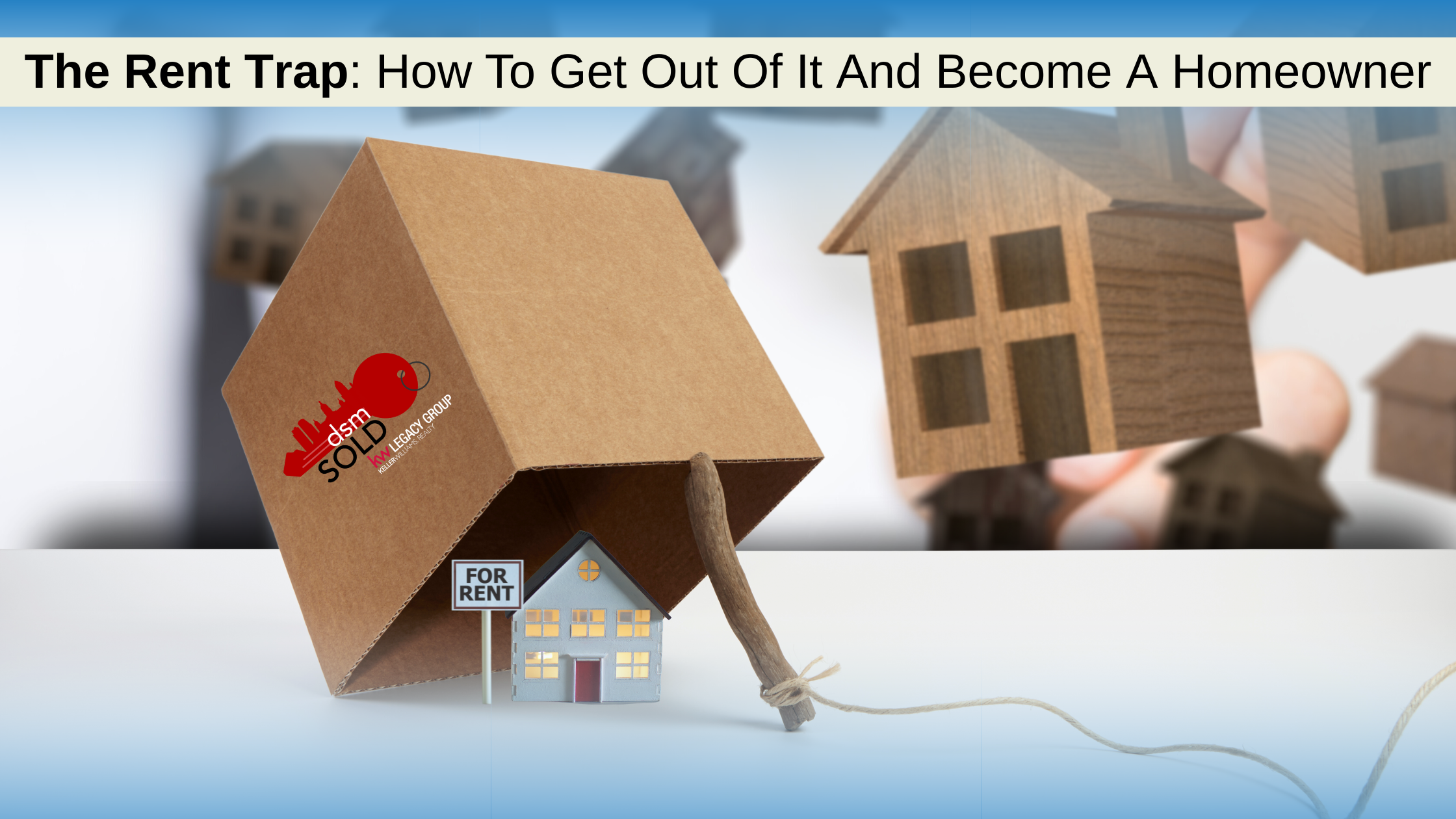
For renters who are interested in buying a property, the market is competitive. Saving money for a down payment and closing costs is challenging when rents appear to be at an all-time high. High mortgage interest rates and inflation are also detrimental.
However, this situation has been present before. In Des Moines, Central Iowa, and the nearby counties, there are solutions to lessen the pain of home ownership right now.
As a result, you've found yourself in a scenario where renting seems to be your only option indefinitely and buying a home seems increasingly unlikely. You are not by yourself. In fact, you are one of many people who have fallen into what is known as "the rent trap."
Many people have long since given up on the idea of home ownership and accepted an endless cycle of renting. In our area, though, we are still seeing many options where homeownership can be attainable and sometimes even cheaper than your monthly rent.
So we're here to reassure you that getting a house early on is not just feasible but also wise.
Did you know that renters frequently have to choose between renewing their current lease, starting a new one, or purchasing a home each year? Nothing has changed this year. But it's a good idea to have a basic understanding of the true costs of renting going forward before you delve too deeply into your options.
“Three out of four renters (74.2%) who have moved in the past 12 months reported seeing their rent increase. The strain from recent rent hikes isn’t exclusive to renters who have recently moved. Nearly two-thirds of renters (63.2%) who have lived in their current rental between 12 and 24 months, and likely renewed their lease, have also reported increases in their rent.” -information from realtor.com/research/october-2022-rent/
Looking back at the historical data, it shouldn’t be surprising. That's because rents have been steadily increasing since 1988, according to the Census (see graph below):

Why you must avoid falling into the "rent trap"
Many people are deterred from becoming homeowners not just by the cost but also by the commitment. Renting is linked to independence and the notion that you are not confined to one location and can relocate at any time. Many people also hold out hope that one day their monthly salary will be high enough to allow them to make an upfront property purchase.
Although the concept may seem appealing, the truth is that inflation has a significant impact on rental pricing. If you don't plan ahead, you'll eventually spend more on rent than you would have on a mortgage.
Starting early and little is the key. While you are saving up for a down payment on a larger home, purchase a modest property, such as a small condo with rental potential or a 2 bed, 1 bath house, and live there. With this method, you can progressively move up the property ladder.
Here are some more handy tips for escaping the rent trap:
Start saving up for a deposit
A sizeable deposit will improve your chances of getting your home loan approved, while also lowering your monthly repayments on the loan. Of course, for younger homebuyers, scraping together the money for a deposit is the most difficult part of the process.
It will require some careful budgeting on your part. In many ways, saving up is a simple concept that is difficult to execute. Start by drawing up a list of your monthly expenses, and identifying the areas where you can cut back.
The good news for first-time buyers is that banks are increasingly approving home loans with lower deposits and also increasingly with no deposit required, with some banks even willing to finance the closing costs for you or have grants and programs to assist with this.
Focus on your credit record
A good credit record is your most important asset when buying a property. Keeping a clean credit record goes back to the key principle of “starting small”. In other words, applying for credit on purchases with low monthly repayments. The credit you build up on such endeavors will help you in the long run.
A good place to start would be store credit, cell phone accounts and bank loans – especially for other assets, such as a car. Being diligent about monthly repayments on your credit card will also significantly benefit your credit score in the long term.
Spend less on rent
Keeping your rent low will go a long way toward achieving home ownership. Remember, your aim is to start small, which means your first property purchase should be the kind of property you would normally be tempted to rent instead, such as a one-bedroom flat.
Luxury shouldn’t be the priority when renting; rather focus on finding somewhere comfortable, then put the money you might otherwise have spent on a more expensive rent toward the deposit on a property.
Identifying the properties you can afford will be critical to planning your first step onto the property ladder.
Now, it's important to assess if renting will still be a viable option in 2023. According to the graph below from realtor.com's 2023 Housing Forecast, rents will likely continue to rise:

Homeownership Offers a Barrier to Increasing Rents
You might reevaluate your options in light of these escalating expenditures. It might be time to put homeownership first if you want to have more stability. Owning a home gives you a reliable monthly expense that you can lock in for the life of your loan, which is just one of the numerous advantages. According to Freddie Mac:
“Monthly rent payments may increase over time, but a fixed-rate mortgage will ensure that you’re paying the same amount each month. With a fixed-rate mortgage, your interest rate is locked in for the life of loan. Steady payments allow you to budget wisely and make plans for the future.”
Locking in your monthly housing payments for the life of your loan can be a huge benefit if you're intending to move this year. If you leave your housing payment up to your landlord and their renewal cycle, you won't have to worry about whether you need to change your budget to allow for yearly hikes.
The additional benefit of rising home equity is also enjoyed by homeowners. According to CoreLogic's most recent Homeowner Equity Insight study, the average homeowner actually increased their equity over the previous year by $34,300. Your rent payment as a tenant solely goes toward the cost of your home. When you pay off a mortgage on a property, the forced savings that is your home equity help you increase your wealth.
Conclusion
The first thing to remember is that home ownership does not always mean going for a huge, extravagant house. Start small, get experienced, and learn how home ownership fits into your life before you commit to anything. It's crucial to consider your actual costs if you're considering renting this year.
Let's discuss how you can start the process of becoming a homeowner right away.
Give us a call for a free consultation with The dsmSOLD Team.

Ryan Rohlf
Chief Client Advocate | REALTOR® | The dsm SOLD Team at Keller Williams Legacy | Keller Williams Legacy Group Midwest
or another way