

Published May 4, 2022
Prevent (Home) Buyer’s Remorse: How to Navigate House Hunting in a Competitive Market

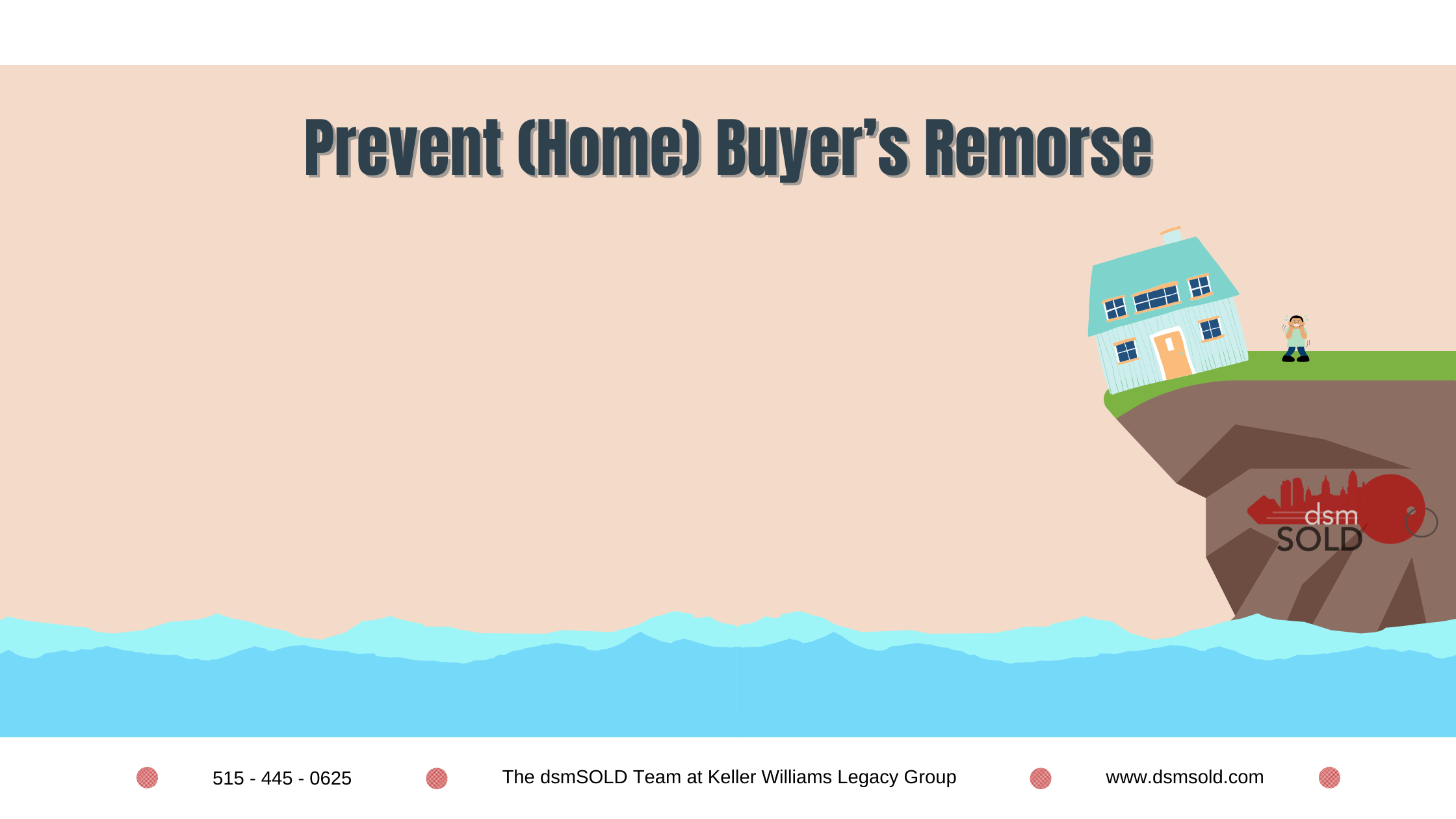
Here’s how to win at house-hunting in a competitive Des Moines, Iowa metro real estate market and make a winning offer — without your head spinning.
Home buyers in Des Moines, Iowa all want the same thing, right? A house that meets their needs and is a good fit for their budget. But what you end up with when you buy a home can vary widely from one buyer to another.
One reason for this is that people come into the process with different expectations — and different budgets. Another reason is that buyers often have an emotional attachment to their desired homes and don’t think about whether they can afford them.
You’re ready to buy a house. You’ve got your finances in order, you’ve found the perfect “forever home,” and now all you need to do is make an offer. But what if you get outbid? Or worse, what if the seller doesn’t accept your offer at all? What then?
This is where home buyer’s remorse comes in. If you don’t know how much house you can afford and stick with it, there’s a good chance that you could end up with buyer’s remorse after closing on a home that exceeds your budget.
If you know what to expect from the home-buying process and have some strategies to help you make smart decisions, you'll be much less likely to regret your purchase of your Des Moines, Iowa area home down the road.
In addition to pressure to exceed their budgets and rising interest rates, buyers are facing hurdles like these six:
1. Requests to Waive Contingencies
Sellers will sometimes ask buyers to waive their appraisal contingency and home inspection. Waiving the appraisal contingency or providing an appraisal gap waiver, meaning you'll make up the difference if it doesn't appraise, has been a common tactic used in the heat of this market. If you do this, know that in addition to your downpayment required by the lender, if the home doesn't appraise at the value for which you're purchasing it, you'll be expected to come up with that difference.
Some buyers are also waiving contingencies related to home inspections. These investigations are an opportunity to have a home inspector view the home based on disclosures and for the buyer to use findings as a bargaining tool. If there is something wrong with it — if it needs repairs and those repairs aren’t covered in your contract — you can use that information as leverage when negotiating with your seller on price or other terms of closing.
Eliminating these protections can end up costing money for buyers. And the more offers the buyer writes and loses, the more risk they'll tolerate. So, they may waive contingencies and regret it later. Talk to a buyer’s agent who will guide you through this and explain the risks of removing protections and unknown variables. Be sure to negotiate any new conditions into your offer!
2. Speed Showings and Decisions
The house hunting process can be pretty stressful. That’s why it’s important to enjoy the “home selection” process, as well. With a competitive market in many areas, there is no shortage of homes to choose from. This can lead to “buyer’s remorse” — that sinking feeling you get when you realize how much time and effort you just spent on a home that doesn’t work. So take notes immediately after viewing a home. If you’re able to prepare beforehand, create a list of wants and requirements in priority order. Immediately after seeing each home, rank it based on the list.
Getting feedback from your realtor is essential, as he or she will be able to provide suggestions on how to maneuver around this. When buying a new home, speed is often underrated.
3. Focusing on the Top of Your Price Range
If you’re looking in a market area in the Des Moines, Iowa metro where listings are achieving multiple offers and homes are going above asking price, don’t set your heart on houses at the top of your price range. If $300,000 is your upper limit, look at houses priced at $250,000 or $275,000. Otherwise, you’re going to be outbid from the gate every time.
If you absolutely must have a brand new house that won’t need any maintenance for years to come, then go ahead and bid a little higher than other buyers would for similar properties. Just remember that it could be two or three years before you recoup that premium when it comes time to sell.
4. The Need to Compromise
There are times when the buyer will need to compromise. It’s important that they know what they want and don’t want, but there is a reality of the market.
The seller has a lot of control over whether or not something is going to sell. They can decide what price they want, how much time they want to put into fixing up their home and even if they want to sell at all.
As a buyer, you might have to compromise on location, property type or features. You may also have to get creative with your search parameters when looking for a new home.
5. Don’t Rush Into Anything
You may be under pressure from your real estate agent and family members who want to see you move as soon as possible, but rushing into buying a house isn’t going to help anyone in the long run. Take your time with each house that you look at, even if it means waiting months longer than expected before moving out of your rental apartment or selling your current home on the market.
6. Information Overload
The home buying process can be overwhelming, especially if you’re doing it for the first time. There are so many things to consider, from the type of mortgage, to what utilities are included in the purchase price, to what kind of inspections you need.
Make sure you're working with an agent that will give you the education you need to help you make an informed decision. They’ll provide education to buyers so that they’re learning as much as they can about the market, including the risks involved with different negotiations. If buyers are going to shorten terms or remove protections, they need to be well informed about the pitfalls.
CONCLUSION:
To some degree, buyer’s remorse is inevitable when buying a home. You can, however, help prevent it by taking action to research and pass on the most relevant information. An agent who is a good source of information can help you take actions that put you in the best position to accept offers quickly and close deals quickly.
But just because you don’t have buyer’s remorse doesn’t mean that it won’t happen to you. This can happen to any new homeowner. You just have to put an effort in to prevent it, and there are many things you can do to make sure that it doesn’t happen to you.
In the end, you'll know what you need to know and will only have to rely on your own instincts and knowledge. Good luck on your hunt for the perfect new house! If you're looking for someone to help you navigate this ups and downs of the home buying process in the Des Moines, West Des Moines, Ankeny or surrounding areas of Iowa, give us a call today. We are here to educate you and ensure you get the best possible home at the best possible price. Though the above items are happening more often in this market, we are skilled negotiators and can help you prepare an agreement that stands out in the crowd.

Ryan Rohlf
Chief Client Advocate | REALTOR® | The dsm SOLD Team at Keller Williams Legacy | Keller Williams Legacy Group Midwest
or another way