

Published September 1, 2022
Residential Real Estate Investing: Why You Should Consider It

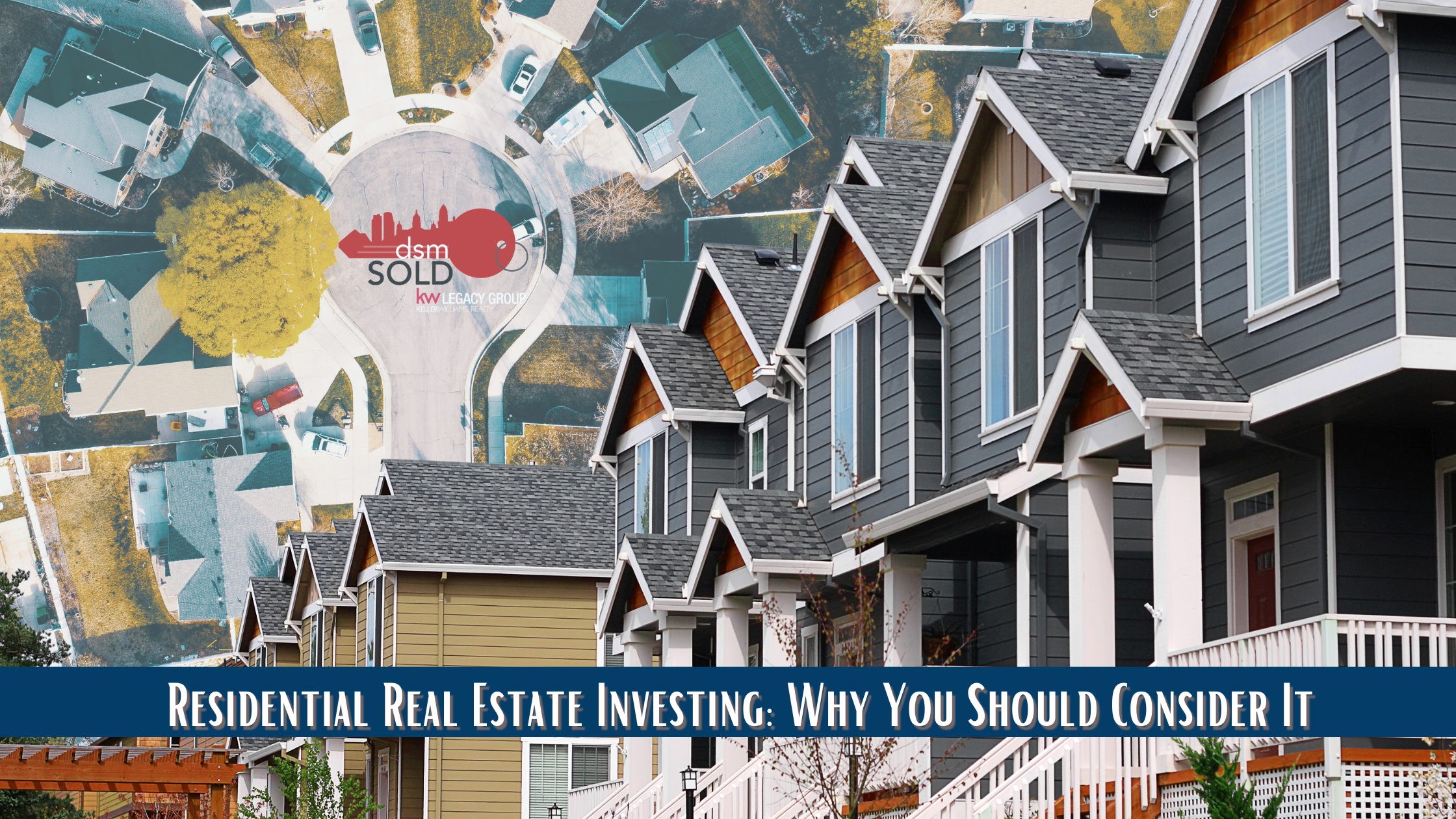
It's no secret that real estate has always been a major part of the financial picture for a lot of people. Whether you're planning to buy or sell soon, or just have other queries about investing in residential real estate this is a must read!
Residential real estate is a broad term that can encompass much more than just single-family homes. There are other forms of residential property worth categorizing, but in some cases, it can be a challenge to differentiate between the different types.
Type of Residential Real Estate:
When you think about real estate, you might picture a house or apartment building. This is the most common type of property, but there are many other types of properties that can be used as an investment.
The most common type of residential real estate is the single-family or stand-alone home. They are situated on their own lots of land. Homes range from small one-bedroom apartments or homes to larger two- or three+ bedroom houses. This can be found throughout all types of neighborhoods, including suburban areas and urban areas. Single-family homes are typically designed to contain a single family and are usually located in residential areas.
A townhouse is a privately owned residence that usually has many stories and shares one or two outside walls with the adjoining property, but the rest of the building is privately owned. It can be an apartment building or condominium, townhouses are usually rented out by the owner rather than being sold. These homes are usually built on the same level as their neighbors, but may also be situated above ground level. Townhouses can vary widely in size from small one-bedroom units to large four-bedroom homes. When considering investing in these types of properties, it's important to do research to ensure the home owners association allows rentals
A condominium (or condo) is a separately owned individual residential unit that is part of a larger community of similar units, such as a townhouse, a high-rise building, or a condo complex. Unlike apartments, which are typically held by large corporations or property management firms, condos are frequently owned by an individual in joint sovereignty with a condo owners organization/ home owners association (COA/HOA). Similar to townhouse style properties it's important with condos to ensure to owners association allows rentals and what, if any, restrictions there may be on renting out the property.
Multi-family houses are a type of residential building that consists of 2 to 5 separate residential units. They are usually located in neighborhoods and urban areas. Multi-family housing includes apartments, condominiums, townhouses, and row houses. Above 5 units, while still residential homes, these are generally considered more of a commercial investment. While smaller multi-family properties up to 5 units are more often categorized as residential.
Multi-family housing may be owned by individuals or companies with multiple owners sharing one common property line. It may also be rented out by individual owners through legal agreements known as leases or subleases.
3 Key Takeaways About Residential Real Estate
Keep these considerations in mind when researching residential real estate.
The markets for residential and commercial real estate are separate. Depending on the kinds of properties you're interested in buying, your real estate investing plan may look very different because demand for residential real estate does not always correspond to that for commercial property.
If you're looking to buy a home, you might consider buying a house in an area where you can use it as an investment property. If you're considering buying rental properties, you'll want to look at areas where there's a lot of demand for rentals.
If you're planning to buy a home, it's important to know that real estate prices vary from market to market. To gain an understanding of your neighborhood market, visit open houses and search internet listings.
If you are interested in buying or selling a home, contact a Realtor or real estate agent to learn more about the real estate market in your neighborhood.
Financing options are varied. You might need to engage with a mortgage lender if you decide to buy residential real estate. Look into the lending alternatives that are accessible to you and make note of the interest rates, down payments, and requirements for income verification.
When buying a house, there are many things that need to be considered including location, cost of living, size of your family, and whether or not you will want to move in the future.
Conclusion
Whether you're looking for your first rental property or are a seasoned investor, make sure to do the right research before you make any decision. The market is constantly changing, and what might have worked in the past might not work today. If you're investing locally, keep an eye on the local economy, laws, and property trends. If you're planning to rent out a vacation home on the beach, make sure that your home checks all the boxes as far as vacation rentals go. These are all things to consider when starting a new business or venture. Consult a licensed real estate or financial professional before making any legal or financial commitments.
Bonus Tips
1% Rule
If you're just getting started with investing, a good rule of thumb is the 1% rule. Generally speaking, this rule states that what you purchase the property for, say $150,000, that you should be able to get equal to or greater than $1,500 a month in rent. In a hotter real estate market, these can be harder to find in single family and sometimes more easily found in condo/townhome area.
Take some time to familiarize yourself with capitalization (CAP) rates and how to calculate this. The higher the CAP rate, the better return on investment you will find. Need help figuring this out? We have several tools we use to analyze investments for ourselves and our clients and we'd be happy to assist you!
Rent your current home/ Planning for the future
Own a home or looking for your first home with a plan of investing? Consider this - if you own a home already, what would it look like to rent that out and buy something new? Typically this home was purchased for less than what it could be sold for in today's market. You may even find that what you purchased for and what you could rent it for meet or exceed the 1% rule. Sometimes this can be a great option to get your start in investing. Rather than buying something new, at a higher price and higher interest rate, your current home has equity and likely a lower interest rate, thus the CAP rate and return will likely be higher for you.
If you're a first time buyer looking for a home, consider purchasing something that will make a good rental down the road. In this case, look for a property that has 2-3 bedrooms and a full bath. Something that's around 1000sf or so, or maybe a little larger. Analyze what you could get for it if you rented it today, and consider with your agent if it would make a good investment in the future - that's something we can help you with in the Des Moines and Central Iowa areas.
House Hacking
Another way to get started in investing while owning only one property is to make your first purchase a small multi-family property, like a duplex. Something where you could handle the payment if you didn't have a tenant in place. Having a second unit will allow you and your renter to have your own spaces yet will allow you additional income to put towards your mortgage and pay the property off quicker, ultimately allowing you to buy another property sooner or re-finance your equity and use that towards another purchase.
If you're wanting a single family home to start, rather than a duplex or other multi-family, consider having a roommate. We know many clients and friends in the Des Moines and Central Iowa areas that have rented out a bedroom, or sometimes multiple bedrooms, in their homes. Similar to owning a multi family property, this will allow you to reduce your expenses while putting more funds towards your mortgage and getting you into a position where you can purchase another property sooner. If you plan to follow this model, it's not a bad idea to have a second bathroom, that way you and your roommate/renter each have your own space while sharing living and kitchen areas.
Hope this all helps if you're getting started with investing!! As always, feel free to reach out to our team of experts in real estate if there's anything you need. We are here to help you with your real estate investing needs in the Des Moines and Central Iowa areas, and we'd love to connect!

Ryan Rohlf
Chief Client Advocate | REALTOR® | The dsm SOLD Team at Keller Williams Legacy | Keller Williams Legacy Group Midwest
or another way